

Canada is so large that travellers can easily mistake it for one destination when it is really a collection of very different regions. The Best Parks and Tourist Centers in Canada range from Rocky Mountain wilderness and Pacific rainforest to Atlantic coastlines, historic cities and Indigenous cultural landscapes. Choosing between them requires more than identifying famous names; distance, season, weather and local access can dramatically change the experience.
This guide brings together Canada’s major national parks, protected landscapes, historic centres, cities and garden destinations. It focuses on what each place offers, who it suits and how travellers can connect destinations without creating an unrealistic itinerary. It also considers responsible travel, particularly wildlife safety, Indigenous connections, heritage conservation and the pressure created by concentrated tourism.
TravelTourCare follows five principles: Discover, Understand, Prepare, Verify and Travel responsibly. The goal is not simply to tell you where to go. It is to help you understand how Canada’s landscapes and communities fit together so you can build a route that matches your interests, the season and the practical realities of travelling across such a large country.
Canada connects enormous natural landscapes with distinctive regional cultures, historic communities and some of the world’s most significant protected environments.
Quick Answer: Where Should You Go In Canada?
For mountain landscapes, start with Banff, Jasper and Yoho. For rainforest and coastline, consider Pacific Rim. Gros Morne and Fundy offer Atlantic landscapes, while Waterton Lakes adds a different Rocky Mountain experience. For culture and history, prioritise Québec City, Montréal, Toronto, Vancouver, Ottawa, Lunenburg and L’Anse aux Meadows.
Quick Facts About Canada
| Travel question | Useful starting point |
|---|---|
| National parks | 37 national parks and 11 national park reserves |
| Mountain travel | Banff, Jasper, Yoho and Waterton Lakes |
| Coastal nature | Pacific Rim, Gros Morne and Fundy |
| Historic centres | Québec City, Lunenburg, Ottawa and heritage sites across the country |
| Major city experiences | Toronto, Montréal, Vancouver and Québec City |
| Best general planning approach | Choose a region first, then match the route to the season and transport |
| Before travelling | Verify weather, wildfire information, park notices, access rules and entry requirements |
Why Canada Needs Context Before You Go
Canada’s size changes the meaning of distance. Two destinations may appear close on a national map while requiring a substantial journey by road, rail or air. Even within one province, travel time can become a major part of the itinerary. A route that combines Vancouver, Banff and Toronto, for example, involves a very different travel rhythm from a focused trip through Alberta or Québec.
Seasonality is equally important. Summer can provide long daylight hours and broad access to hiking, lakes and coastal environments, while winter transforms many regions into destinations for skiing, snowshoeing, skating and other cold-weather activities. Spring and autumn can bring their own advantages, but conditions vary significantly between provinces and territories.
Wildfire, extreme weather, wildlife activity, road conditions and temporary closures can also affect access. This is especially relevant to large protected areas. Travellers should treat current official notices as part of trip planning rather than as an optional final check.
The Core Problem Travellers Face
The question should not simply be, “What should I see in Canada?” A better question is, “Which part of Canada fits the trip I actually want to make?” A mountain holiday, Atlantic road trip, city break, northern adventure and heritage journey require different planning. Once the region and purpose are clear, it becomes much easier to choose parks, cities and cultural attractions without spending most of the trip travelling between them.
Destination Overview: Understanding Canada’s Geography
Canada stretches across a vast area from the Atlantic to the Pacific and Arctic oceans. Its landscapes include the Rocky Mountains, Pacific temperate rainforest, Great Lakes, prairie landscapes, boreal forests, Atlantic coastlines and Arctic environments. This geography produces substantial regional differences in climate, wildlife, vegetation, transport and tourism seasons.
The country’s cultural geography is equally varied. French-speaking Québec has a distinct historical and linguistic identity, Atlantic provinces retain strong maritime traditions, western cities developed alongside Pacific and mountain environments, and Indigenous peoples maintain longstanding relationships with lands and waters throughout the country. Travelling through Canada therefore means moving between different environmental and cultural systems rather than experiencing one uniform national landscape.
National Parks And Protected Areas In Canada
Banff National Park (Alberta)
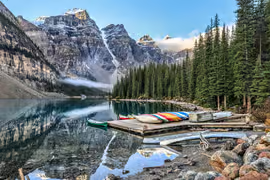
Banff is Canada’s first national park and one of the country’s most recognisable mountain destinations. Its landscape combines Rocky Mountain peaks, glacial lakes, alpine environments, forests and the communities of Banff and Lake Louise. It suits travellers interested in hiking, scenic drives, wildlife observation and mountain scenery, but its popularity means that planning matters. Conditions can change quickly, and access to famous locations may require specific transport arrangements. Visitors should follow wildlife regulations, stay on designated routes and never approach or feed animals. The wider Canadian Rocky Mountain Parks World Heritage property also makes Banff part of a much larger conservation story.
Jasper National Park (Alberta)
Jasper offers a broader wilderness character than many visitors associate with the Canadian Rockies. It is the largest national park in the Canadian Rockies and is known for extensive trails, mountain scenery, wildlife and dark-sky experiences. It suits travellers who want a combination of scenic roads, hiking and quieter wilderness settings. Jasper has also experienced major changes following the 2024 wildfire, so travellers must check current information about open areas, roads, facilities and trails before visiting. The park’s scale rewards slower travel, while responsible visitors should give wildlife plenty of space and follow all current fire and safety instructions.
Yoho National Park (British Columbia)
Yoho sits on the western side of the Great Divide and combines high mountain scenery with glaciers, waterfalls, lakes and important geological features. It is a natural companion to a Rockies itinerary but has its own character and attractions. Travellers interested in hiking, geology, waterfalls and scenic landscapes will find plenty to explore. Conditions in the mountains can change rapidly, and seasonal restrictions may affect particular activities. Current water-activity and conservation rules should be checked before travelling. Visitors should stay on permitted trails and protect fragile alpine environments from unnecessary disturbance.
Pacific Rim National Park Reserve (British Columbia)
Pacific Rim provides one of Canada’s clearest contrasts with the Rockies. Located on the west coast of Vancouver Island, it combines long sandy beaches, temperate rainforest and marine environments. The Long Beach, West Coast Trail and Broken Group Islands units provide different ways to experience the region, ranging from beach walking to demanding backcountry travel and boat-based exploration. It suits travellers who want coastal landscapes rather than mountain scenery. Weather, tides, currents and trail conditions matter greatly here. Visitors should respect wildlife closures, follow marine safety advice and avoid damaging sensitive coastal habitats.
Gros Morne National Park (Newfoundland and Labrador)
Gros Morne is one of Canada’s most distinctive natural destinations and a UNESCO World Heritage site. Its landscape includes fjords, mountains, forests, wetlands, coastline and the remarkable Tablelands, where exposed rock provides evidence of the geological forces that shaped the Earth. The park suits travellers interested in geology, hiking, scenic boat experiences and coastal landscapes. The scale of the area means visitors benefit from allowing several days rather than rushing through it. Weather can change quickly, and some trails have seasonal restrictions designed to protect wildlife. Visitors should follow current trail notices and leave geological features exactly where they are.
Fundy National Park (New Brunswick)
Fundy National Park provides an Atlantic alternative to Canada’s western mountain parks. Located beside the Bay of Fundy, it is known for dramatic tides, forested landscapes, waterfalls, coastal environments and an extensive trail network. It suits travellers interested in hiking, coastal scenery, kayaking and understanding the relationship between tides and ecosystems. Tide conditions require careful attention because the shoreline changes substantially. Travellers should consult current safety information before exploring intertidal areas and should never assume that a route across exposed seabed remains safe as conditions change. The park also supports important conservation work involving Atlantic salmon and other ecosystems.
Waterton Lakes National Park (Alberta)
Waterton Lakes offers a different Rocky Mountain experience near the Canada-United States border and forms part of the Waterton-Glacier International Peace Park World Heritage property. Mountains, lakes, grasslands and changing elevations create a landscape where several ecosystems meet. It is suited to travellers who want hiking, scenery and wildlife with a strong sense of place. Weather can change quickly, especially in mountain environments, so visitors should prepare for conditions rather than relying on forecasts alone. Respect wildlife, remain on established routes and remember that the international setting connects conservation across both sides of the border.
Tourist Centres And Cultural Attractions In Canada
Québec City (Québec)
Québec City provides one of Canada’s strongest historic urban experiences. Its Historic District of Old Québec is a UNESCO World Heritage property, with fortified areas, historic buildings, religious landmarks and streets that reflect the city’s development as a centre of French and British colonial history. It suits travellers interested in architecture, history, food and culture, while nearby natural attractions add another dimension. Visitors should allow time to explore beyond the most photographed streets and recognise that the historic district is a living community. Respect residential areas and heritage structures, especially when photographing or entering historic buildings.
Montréal (Québec)
Montréal combines French-speaking culture with a highly international urban identity. The city is known for neighbourhoods, food, arts, festivals, public spaces and the relationship between Mount Royal and the St. Lawrence River. It suits travellers who want a city experience built around culture rather than only conventional landmarks. Old Montréal provides historical context, while other districts show the city’s contemporary character. The best way to understand Montréal is to move beyond a short list of attractions and spend time in different neighbourhoods. Visitors should respect local communities and remember that cultural districts are working environments, not staged tourist sets.
Toronto (Ontario)
Toronto is Canada’s largest city and one of its most diverse urban destinations. Museums, galleries, neighbourhoods, markets, food and waterfront areas provide multiple ways to experience the city. It is particularly suitable for travellers who prefer urban culture, contemporary arts and multicultural food experiences. Toronto also works as a base for exploring other parts of southern Ontario. Travellers should avoid assuming that the city can be understood from its downtown core alone. Different neighbourhoods have distinctive histories and identities, so allow time to explore beyond major landmarks while respecting local residential spaces.
Vancouver (British Columbia)
Vancouver is particularly useful for travellers who want to combine a major city with immediate access to mountains, forests and the Pacific coast. Its urban landscape sits between the ocean and mountains, creating a strong relationship between city life and outdoor recreation. The city suits travellers interested in food, culture, walking, cycling and nature-based experiences. Vancouver can also serve as a gateway to Vancouver Island and British Columbia’s wider landscapes, although these journeys require additional planning. Visitors should respect parks, beaches and wildlife habitats and should not assume that urban proximity makes wilderness conditions predictable.
Ottawa (Ontario)
Canada’s capital provides a strong introduction to the country’s political and national institutions while also connecting urban heritage with waterways and green spaces. Parliament Hill, the Rideau Canal and national cultural institutions form an important part of the city’s visitor landscape. The Rideau Canal itself is a UNESCO World Heritage property and runs between Ottawa and Kingston through a mixture of towns, waterways and natural landscapes. Ottawa suits travellers interested in history, government, museums and outdoor public spaces. Visitors should plan around seasonal conditions and check current information for individual attractions and canal activities.
Old Town Lunenburg (Nova Scotia)
Lunenburg offers a compact Atlantic heritage experience shaped by maritime history. Old Town Lunenburg is a UNESCO World Heritage property and retains a distinctive historic townscape associated with the development of a British colonial settlement and the region’s maritime economy. It suits travellers who prefer smaller communities, architecture and coastal history rather than major-city sightseeing. A visit works well as part of a Nova Scotia route that includes other coastal destinations. Travellers should treat the town as a living community, keeping residential areas peaceful and respecting historic buildings.
L’Anse aux Meadows National Historic Site (Newfoundland and Labrador)
L’Anse aux Meadows provides an extraordinary archaeological and historical experience on Newfoundland’s northern peninsula. The site preserves evidence of a Viking settlement and is a UNESCO World Heritage property. It suits travellers interested in archaeology, migration history and the early movement of people across the North Atlantic. Because it is a heritage site rather than simply a scenic viewpoint, visitors gain more by learning about the archaeological evidence and landscape. Protect the site by remaining within permitted areas, following interpretation and avoiding any contact with archaeological material.
Botanical Gardens And Eco Parks In Canada
Montréal Botanical Garden (Québec)
The Montréal Botanical Garden is a national historic site and one of Canada’s major botanical destinations. Its extensive collections, thematic gardens, exhibition greenhouses and arboretum make it useful for travellers interested in plants, horticulture, landscape design and environmental education. It works particularly well as part of a Montréal city itinerary because it provides a slower experience after time spent exploring urban neighbourhoods. Visitors should remain within designated garden areas and treat collections as living conservation and educational resources.
Royal Botanical Gardens (Ontario)
The Royal Botanical Gardens near Hamilton is a nationally recognised botanical and conservation landscape. It combines themed gardens, an arboretum and conservation areas around the western end of Lake Ontario. The destination suits travellers interested in plants, landscapes, ecology and slower outdoor experiences. Its scale means visitors can choose between formal gardens and more natural environments. Stay on permitted paths and respect conservation areas, particularly where wildlife and sensitive habitats share space with public access.
Toronto Botanical Garden (Ontario)
Toronto Botanical Garden connects horticulture with urban nature and education. Its themed gardens and connection to nearby ravine landscapes make it useful for travellers who want a nature experience without leaving the city. It can complement a Toronto itinerary focused on museums, neighbourhoods and food by providing a quieter change of pace. Seasonal conditions influence what is in bloom and which trails are accessible. Visitors should check current notices and respect temporary closures designed to protect visitors and the landscape.
Best Time To Visit Canada
Canada does not have one universal best travel season. Summer is generally the easiest period for many national-park road trips, hiking routes, coastal journeys and city-and-nature combinations, but conditions and visitor levels vary by region. The Rockies, Atlantic provinces, Québec and northern destinations all have different seasonal rhythms.
Autumn can be particularly attractive for travellers interested in changing foliage and cooler conditions, while spring brings longer days and emerging landscapes but can also produce muddy trails, variable weather and seasonal closures. Winter creates a completely different Canada, with snow sports, frozen waterways, winter festivals and opportunities for northern lights viewing in suitable regions.
For outdoor travel, the best season is the one that matches the activity. Check current trail reports, wildfire information, road conditions, marine forecasts and park notices before setting a fixed route. Shoulder seasons can provide quieter experiences, but travellers should accept that some facilities and activities may operate differently.
Real-World Travel: How These Places Actually Work
Transport And Getting Around
Canada requires realistic transport planning. Major cities have public transport systems, while national parks and rural areas often require a car, organised transport or carefully planned connections. Rail can be useful for selected intercity journeys, but it does not make every national-park route practical. Domestic flights can save time across long distances, while road trips provide greater flexibility within a region. Choose one geographic area at a time whenever possible rather than treating the entire country as one road-trip circuit.
Parks And Trails
Protected areas operate under different conditions. Some trails are easy and close to communities, while others require backcountry preparation, permits or substantial experience. Mountain weather, tides, wildfire activity, snow and wildlife can all change conditions quickly. Before entering a park, check official notices, trail reports and current safety information. Never rely entirely on a social-media post or an old travel itinerary.
Heritage Sites And Cities
Canadian heritage destinations often work best when travellers allow time for interpretation. Historic districts, archaeological sites and Indigenous cultural places have stories that cannot be understood from photographs alone. Museums, guided experiences and official interpretation can provide valuable context. In cities, public transport and walking can often reduce the need for a car, while historic neighbourhoods benefit from respectful behaviour because residents continue to live and work there.

Regional Systems: How Canada Divides For Travellers
Western Canada
Alberta and British Columbia are the strongest choices for Rocky Mountain landscapes, Pacific coastlines, forests and outdoor adventure. Banff, Jasper, Yoho and Pacific Rim can form different regional journeys, but they should not be squeezed into an unnecessarily short itinerary.
Central Canada
Ontario and Québec offer Canada’s strongest combination of major cities, historic districts, museums, waterways and cultural experiences. Toronto, Ottawa, Montréal and Québec City can support a city-focused itinerary, while surrounding areas provide access to nature and smaller communities.
Atlantic Canada
New Brunswick, Nova Scotia, Newfoundland and Labrador and Prince Edward Island offer coastal landscapes, maritime history, smaller communities and distinctive food traditions. Gros Morne, Fundy, Lunenburg and L’Anse aux Meadows demonstrate how nature and heritage can work together in this region.
The North And Arctic
Yukon, Northwest Territories and Nunavut offer some of Canada’s most remote landscapes and distinctive Indigenous cultural contexts. These destinations require more specialised planning than major city routes. Transport, weather, seasonal access and local guidance become especially important, so travellers should research individual destinations rather than applying southern Canadian travel assumptions.
Travel Safety, Culture And Wellness
Outdoor safety is one of the most important parts of travelling in Canada. Mountain environments can experience sudden weather changes, while coastal areas can involve strong currents and rapidly changing conditions. Winter adds additional risks involving ice, snow, extreme cold and reduced daylight. Check official warnings and prepare for the environment you are actually entering rather than relying on general assumptions about the season.
Wildlife awareness matters throughout the country. Bears, elk, moose and other animals can appear near roads, trails and communities. Give animals plenty of space, follow food-storage rules and never feed wildlife. In marine environments, maintain appropriate distance from animals and follow local instructions. Responsible wildlife tourism means allowing animals to behave naturally rather than trying to guarantee a close photograph.
Cultural awareness should include recognition of Indigenous peoples and their continuing relationships with Canada’s lands and waters. Many parks and heritage sites acknowledge Indigenous connections, and some destinations offer experiences led by Indigenous communities. Approach these opportunities with respect rather than treating culture as entertainment. Ask permission before photographing people, follow community guidance and support experiences on their own terms.
Decision Framework: Plan Your Canada Route
- Choose your travel style: decide whether nature, cities, heritage, wildlife, road trips or winter experiences matter most.
- Select one main region: begin with western, central, Atlantic or northern Canada rather than the entire country.
- Match the season: compare the timing of your trip with the activities and landscapes you want to experience.
- Verify access: check current park notices, wildfire conditions, road reports, trail information and attraction requirements.
- Travel responsibly: respect wildlife, Indigenous communities, heritage sites and the ecological integrity of protected areas.
Action Checklist For Canada
Before You Go
- Check current entry and immigration requirements.
- Research the climate for each province or territory on your route.
- Check wildfire, weather, road and park notices.
- Allow realistic travel time between destinations.
During Your Visit
- Carry appropriate clothing for changing weather.
- Follow wildlife-safety instructions and keep a safe distance.
- Stay aware of trail, road and marine conditions.
- Respect local communities and public spaces.
At Sensitive Sites
- Do not touch or remove archaeological or geological material.
- Stay on designated trails and obey closures.
- Keep food and waste secure in wildlife areas.
- Carry your waste with you when disposal facilities are limited.
Common Mistakes And How To Fix Them
- Mistake: Treating Canada as one short itinerary. Correction: choose a region and explore it properly because national distances can consume substantial travel time.
- Mistake: Assuming summer works everywhere in the same way. Correction: research regional weather, because Canada’s provinces and territories experience different seasonal conditions.
- Mistake: Ignoring wildfire information. Correction: check current official notices before travelling because fires can affect roads, trails, air quality and access.
- Mistake: Approaching wildlife for photographs. Correction: keep a safe distance and follow park wildlife rules because animals remain wild even in popular tourist areas.
- Mistake: Visiting heritage sites without context. Correction: use official interpretation and learn the history of the place instead of treating it as a photo stop.
Common Misconceptions About Canada
- “Canada is cold all year.” The country experiences four distinct seasons, with major regional differences.
- “The Rockies are the main attraction.” Canada also has Pacific rainforests, Atlantic coasts, prairie landscapes, boreal forests and Arctic environments.
- “You can drive everywhere easily.” Remote destinations may require flights, boats, specialised transport or substantial preparation.
- “National parks are just scenic viewpoints.” They are protected environments with conservation rules, wildlife responsibilities and changing access conditions.
Frequently Asked Questions About Canada
What are the best national parks in Canada?
Banff, Jasper, Yoho, Pacific Rim, Gros Morne, Fundy and Waterton Lakes are strong starting points, but the best choice depends on whether you want mountains, forests, coastlines, wildlife, geology or a combination.
What are the best tourist attractions in Canada?
Major choices include Québec City’s historic district, Montréal, Toronto, Vancouver, Ottawa, Lunenburg and L’Anse aux Meadows, alongside Canada’s extensive national parks and protected landscapes.
Is Canada good for nature tourism?
Yes. Canada has an extensive protected-area network covering mountains, forests, lakes, coastlines, tundra and other ecosystems. Travellers should choose destinations according to season, access and their ability to travel safely and responsibly.
What is the best time to visit Canada?
Summer works well for many outdoor journeys, while autumn is attractive for foliage and winter suits snow-based experiences. The best period depends heavily on the region and activities you plan.
Which Canadian cities should I visit?
Toronto, Montréal, Vancouver and Québec City provide four very different urban experiences. Ottawa adds national history and institutions, while other cities such as Halifax and Calgary can support more regional itineraries.
How many days do you need in Canada?
There is no useful single number because Canada is so large. A short trip should focus on one city or region, while longer journeys can combine destinations that are geographically connected.
Is Canada suitable for a first-time traveller?
Yes, particularly if you build a focused itinerary. Major cities are straightforward starting points, while national parks require more preparation for weather, wildlife, transport, trail conditions and seasonal changes.
What should I verify before visiting a Canadian national park?
Check current park notices, wildfire information, road and trail conditions, weather warnings, wildlife guidance, seasonal restrictions, transport arrangements and any permits or reservations that your planned activity requires.
Conclusion: Understanding Canada Before You Travel
Canada rewards travellers who think regionally. The Rockies offer a completely different experience from Atlantic Canada, while Québec’s historic cities, Ontario’s urban centres and British Columbia’s Pacific landscapes each reveal another side of the country. Trying to combine everything into one itinerary can make the journey less meaningful and less practical.
Choose a region, understand its season, build realistic travel distances and verify conditions before departure. Whether you are walking through a historic district, hiking beside a mountain lake, exploring a coastal park or learning about Indigenous connections to the land, responsible travel will help protect the places that make Canada worth experiencing.
Verify Before You Go
Important: Travel conditions, entry requirements, regulations, health guidance and official notices can change. Use TravelTourCare for research and context, then confirm current requirements with the relevant official authority before making formal travel decisions.
Sources And References
- Parks Canada — national parks, national park reserves, national historic sites and protected heritage places.
- Destination Canada — official national tourism information and destination guidance.
- UNESCO World Heritage Centre — Canada’s World Heritage properties and country information.
pack was heavy, no complaints
Third time ordering and they haven't missed yet. The Wedding Cake this round was sticky, smelled loud through the bag, and had me knocked out by like 10pm. Prices stay reasonable too which is why I keep coming back.
Easy ordering, simple checkout, no weird steps. The gas was straight and did what it needed to do. I’ll be back.
Not bad at all. The pre-rolls burned clean and the price was right. I'll probably grab a bigger order next time.
bro these edibles knocked me OUT. took two gummies thinking I was tough, woke up 9 hours later like what year is it 😭 just kidding no emojis but yeah they hit hard, be careful
First time ordering and I wasn’t sure what to expect. The flower showed up fresh and sealed tight, and the communication stayed solid the whole way through. Definitely felt legit and I’ll probably run it back soon.
Was in town visiting family and needed something reliable. Found these guys and decided to try a small order. Everything landed exactly how they said it would. Made my trip a lot more relaxed.
first time trying an online spot cuz my usual dude fell off. was nervous cuz you hear stories but these guys came through no cap. tracking info was accurate, pack showed up sealed, buds looked exactly like the pics. definitely gonna keep ordering from here on out