

The Best Parks and Tourist Centers in Greece are found across a country where ancient heritage, mountains, forests, islands, archaeological landscapes and modern cities exist within a surprisingly varied geographic system. Greece is often imagined primarily through its famous islands and classical monuments, but that view leaves out important mainland landscapes, national parks, protected areas and culturally significant towns.
This guide looks at Greece through its natural and cultural systems. It covers national parks and protected landscapes, major tourist centres, archaeological and heritage destinations, botanical and urban gardens, regional travel patterns and practical considerations for building an itinerary. The purpose is not to create a simple list of attractions, but to explain how different places fit together and what kind of traveller each experience suits.
TravelTourCare follows five principles: Discover, Understand, Prepare, Verify and Travel responsibly. That means considering communities, ecosystems, archaeological heritage and visitor pressure alongside sightseeing. Entry requirements, transport arrangements, access restrictions, weather conditions, fire notices and official site information can change, so travellers should verify current information with the relevant official authority before making formal travel decisions.
Greece is a meeting point of Mediterranean landscapes and layered civilisations, where mountains, seas, villages, cities and archaeological sites form one remarkably diverse travel environment.
Quick Answer
For nature, consider Mount Olympus, Parnassus, Vikos-Aoos, Ainos, Samaria and Oeta. For cultural tourism, Athens, Thessaloniki, Delphi, Olympia, Meteora, Rhodes and Corfu provide very different experiences. Greece also offers important gardens and urban green spaces, including the National Garden in Athens and the Botanical Garden of Julia and Alexander N. Diomedes.
Quick Facts
| Travel factor | What to know |
|---|---|
| Protected landscapes | Greece has national parks, Natura 2000 areas and other protected landscapes across mainland and island regions |
| World Heritage | Greece has 21 properties on the UNESCO World Heritage List |
| Best for nature | Spring and autumn for many walking and landscape trips; summer suits selected mountain and coastal routes |
| Best for cities | Year-round, with spring and autumn often comfortable for extended sightseeing |
| Main interests | Ancient heritage, Byzantine history, islands, mountains, beaches, food and culture |
| Getting around | Ferries, flights, buses, cars and regional transport all have roles depending on the route |
| Verify before travel | Check entry rules, transport, archaeological-site access, weather, fire restrictions and local notices |
Why Greece Needs Context Before You Go
Greece can look like a straightforward summer destination, but its geography makes that assumption misleading. The country contains a mountainous mainland, thousands of islands and islets, extensive coastlines, forests, gorges and urban centres. Travel between two places that appear relatively close on a map can involve mountain roads, ferry connections or combinations of different transport modes.
Seasonality is equally important. The hottest part of summer can change the experience of archaeological sites, exposed hiking routes and inland cities. Spring can be particularly attractive for landscapes and wildflowers, while autumn can provide comfortable conditions for cultural and outdoor travel. Mountain areas may have conditions very different from coastal destinations at the same time of year.
Visitor pressure also varies. Athens, famous islands and major archaeological sites can experience significant concentration during peak periods, while less-publicised mainland regions can provide a slower experience. Travellers can reduce pressure by spreading their itinerary geographically, staying longer and considering destinations outside the most heavily visited corridors.
The Core Problem Travellers Face
The question “What should I see in Greece?” usually produces an enormous list. A more useful question is “Which Greek landscape and cultural experience fits my trip?” Someone interested in ancient history may prioritise Athens, Delphi and Olympia, while a nature traveller may prefer Olympus, Vikos-Aoos or Ainos. Island travel creates another set of logistical considerations. Matching destinations with season, transport, interests and responsible travel creates a more realistic route.
Destination Overview
Greece occupies the southeastern edge of Europe and combines mainland terrain with an extensive island system. The mainland includes several major mountain ranges, while the Aegean and Ionian seas create very different island environments. This geography has shaped Greek settlement, agriculture, trade, mythology, religious traditions and modern tourism.
Central Greece connects mountain landscapes with major archaeological destinations such as Delphi. Northern Greece contains substantial mountain systems, lakes and culturally diverse cities such as Thessaloniki. The Peloponnese combines archaeological heritage, mountains and long coastlines, while Crete offers a distinct island landscape with its own mountains, gorges and cultural history. The Ionian and Aegean islands add further variation, meaning there is no single version of a Greek travel experience.
National Parks And Protected Areas
Greece’s protected landscapes range from mountain ecosystems and gorges to coastal and wetland environments. The country’s environmental authorities recognise national parks and biodiversity-protection areas as part of a broader protected-area system, including Natura 2000 sites. This makes it useful to think beyond a simple list of “parks” and understand the ecological character of each destination.
Mount Olympus National Park (Central Macedonia and Thessaly)
Mount Olympus is one of Greece’s most recognisable mountain landscapes and has an exceptional place in Greek mythology and cultural imagination. The wider area combines steep mountain terrain, forests, gorges and high-elevation environments. It suits hikers, landscape photographers and travellers interested in the connection between mythology and nature. Spring, summer and early autumn can provide different opportunities for mountain exploration, but conditions change considerably with elevation. Visitors should select routes appropriate to their ability, check current mountain conditions and avoid disturbing sensitive habitats or leaving established paths where restrictions apply.
Mount Parnassus National Park (Central Greece)
Mount Parnassus provides a strong combination of mountain scenery, forests, caves, gorges and alpine environments. The park is particularly interesting because it can be connected with the nearby cultural landscape of Delphi, allowing travellers to combine nature with ancient history. It suits walkers, cyclists, photographers and travellers who want a mountain experience without moving far from major heritage sites. Warmer months can support many outdoor activities, while winter creates a different mountain environment. Visitors should prepare for changing conditions and respect protected vegetation and wildlife.
Vikos-Aoos National Park (Epirus)
Vikos-Aoos National Park in northwestern Greece is known for dramatic gorges, mountain landscapes, rivers, lakes and traditional settlements. The area provides one of the country’s strongest experiences for travellers interested in walking and rural landscapes. The nearby Zagori cultural landscape adds another dimension through its villages, paths and historic built environment. Spring and autumn can be particularly attractive for walking, while summer provides longer daylight but can be warmer. Travellers should respect village life, stay on appropriate routes and prepare carefully for remote terrain.
Mount Ainos National Park (Kefalonia, Ionian Islands)
Mount Ainos offers a mountain experience within the island environment of Kefalonia. Its forests include the distinctive Kefalonian fir, while the mountain provides elevated views over the Ionian landscape. The park suits travellers who want to combine an island holiday with hiking and nature rather than spending the entire trip on the coast. Spring and early summer can provide attractive conditions for walking, while autumn can offer a quieter mountain experience. Visitors should respect protected vegetation and wildlife and prepare for routes that differ from ordinary coastal sightseeing.
Samaria National Park (Crete)
Samaria National Park is centred on the famous Samaria Gorge in the White Mountains of Crete. The landscape combines dramatic rock formations, steep terrain and distinctive Mediterranean mountain ecology. It suits experienced walkers and travellers interested in geology, scenery and Cretan nature. The practical experience depends strongly on seasonal conditions and current management arrangements, so official information should be checked before setting out. Visitors should not underestimate the physical demands of gorge walking and should respect restrictions designed to protect both people and the environment.
Oeta National Park (Central Greece)
Oeta provides a quieter mountain alternative to Greece’s more famous natural destinations. Fir forests, mountain meadows, streams and traditional settlements form a landscape suited to walking, nature observation and slower rural travel. It works particularly well for travellers who want to explore beyond heavily visited routes. Spring, summer and early autumn can offer different combinations of vegetation, mountain scenery and village life. Responsible visitors should follow local guidance, avoid disturbing rare plant communities and recognise that quieter landscapes can still contain sensitive ecosystems.
Zakynthos National Marine Park (Ionian Islands)
Zakynthos National Marine Park protects important coastal and marine environments around the island and is particularly associated with the conservation of the loggerhead sea turtle. It provides an example of why Greek nature tourism cannot be understood only through mountains and forests. Coastal activities need to coexist with conservation requirements. Summer is a major period for island travel, but visitors should check current marine-park rules and wildlife-protection guidance before planning activities. Travellers should keep appropriate distance from wildlife, respect protected nesting areas and follow restrictions designed to reduce disturbance.’
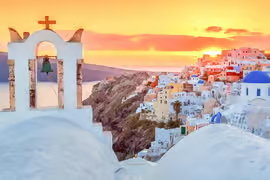
Tourist Centres And Cultural Attractions
Greek tourist centres are strongest when approached as layers of history rather than isolated monuments. Classical archaeology is important, but Byzantine, Roman, Ottoman, modern and contemporary periods also shape the country’s cities and communities. Moving between several types of destination can reveal how Greek culture developed across different regions and centuries.
Athens (Attica)
Athens is the principal gateway for many visitors and one of the world’s most important cities for understanding classical Greek heritage. The Acropolis and its associated monuments form the centre of a wider historic landscape, while museums, neighbourhoods, public spaces and modern cultural institutions demonstrate that Athens is not simply an archaeological destination. The city works throughout the year, although outdoor sightseeing can be demanding during periods of intense heat. It suits first-time visitors, history enthusiasts, museum travellers and urban explorers. Visitors should allow time for neighbourhoods and contemporary culture rather than reducing the city to one monument.
Thessaloniki (Central Macedonia)
Thessaloniki offers a different urban interpretation of Greece. Its history includes Roman, Byzantine, Ottoman and modern periods, reflected in monuments and neighbourhoods throughout the city. The waterfront, White Tower, Byzantine heritage and lively contemporary culture make it a strong northern Greek base. It suits travellers interested in history, architecture, food and urban culture. Spring and autumn are comfortable seasons for extended walking, while indoor cultural attractions make the city useful throughout the year. Visitors should explore beyond the central waterfront and recognise the multicultural history embedded in the city’s built environment.
Delphi (Central Greece)
Delphi is one of Greece’s most significant archaeological landscapes and was an important religious centre in antiquity. The sanctuary of Apollo, theatre, stadium and surrounding mountain setting create an unusually strong relationship between archaeology and landscape. The destination suits travellers interested in mythology, ancient religion, archaeology and mountain scenery. Its position on Mount Parnassus means weather can differ from nearby lowland areas. Travellers should allow time for both the archaeological site and museum and approach the ruins as a cultural landscape rather than simply a collection of photographs.
Ancient Olympia (Western Peloponnese)
Ancient Olympia is closely associated with the ancient Olympic Games and the sanctuary dedicated to Zeus. The archaeological landscape includes the stadium, temples and other structures that help explain the religious and athletic traditions of antiquity. The surrounding environment of olive groves and countryside adds context to the site. Olympia suits history travellers, sports enthusiasts and visitors interested in ancient Greek culture. It can be combined with wider Peloponnese travel, but travellers should give the archaeological landscape enough time to understand its function and significance.
Meteora and Kalabaka (Thessaly)
Meteora combines extraordinary geological formations with historic Orthodox monasteries positioned among the rock towers. The landscape is both natural and cultural, and its UNESCO World Heritage status reflects that exceptional combination. Kalabaka provides the main gateway for exploring the area. Meteora suits photographers, cultural travellers, hikers and visitors interested in religious heritage. Spring and autumn can be particularly useful for combining walking and sightseeing, while summer requires greater attention to heat. Visitors should dress respectfully where required and treat monasteries as active religious places rather than purely tourist attractions.
Medieval City of Rhodes (Rhodes, Dodecanese)
The Medieval City of Rhodes presents a different side of Greek heritage, shaped by the history of the Knights of Saint John and later periods of Mediterranean rule. Fortifications, streets, religious buildings and civic architecture create a strong historic urban environment. It suits travellers interested in medieval history, architecture and island culture. The destination can be visited beyond the main summer season, when walking conditions may be more comfortable. Visitors should respect the residential character of parts of the historic city and remember that heritage conservation depends on careful treatment of buildings and public spaces.
Old Town of Corfu (Corfu, Ionian Islands)
Corfu’s Old Town reflects the island’s long history as a Mediterranean crossroads and forms part of a UNESCO World Heritage property. Its urban landscape contains strong Venetian influences alongside later architectural layers and contemporary life. It suits travellers interested in architecture, history, photography and island culture. Spring and autumn can provide comfortable conditions for exploring streets and cultural sites, while summer brings greater visitor activity. Travellers should explore at a slower pace, respect residential areas and avoid treating historic streets simply as scenic backdrops.
Botanical Gardens And Eco Parks
Greece’s most famous nature experiences are often mountains, islands and coastlines, but gardens provide a useful alternative for travellers interested in plants, urban ecology and slower forms of sightseeing. They can also create a valuable contrast with Greece’s archaeological sites and dense city centres.
National Garden (Athens, Attica)
The National Garden is a major green space in central Athens, close to important civic and historic areas. Its location makes it especially useful for travellers who want a break from archaeological sightseeing and urban movement. The garden offers shade, vegetation and a quieter environment within the capital. It suits families, walkers, photographers and visitors looking for a low-intensity nature experience. Its historical development also reflects the evolution of modern Athens.
Botanical Garden of Julia and Alexander N. Diomedes (Attica)
The Botanical Garden of Julia and Alexander N. Diomedes provides a more specialised plant-focused experience in the wider Athens region. It suits visitors interested in horticulture, plant diversity and environmental education. The garden works particularly well as a complement to Athens rather than as a substitute for the city’s historic centre. Travellers should check current access arrangements before visiting and treat the garden’s collections as living resources rather than simply decorative scenery.
Valley of the Butterflies (Rhodes, Dodecanese)
The Valley of the Butterflies is a distinctive nature destination on Rhodes associated with seasonal butterfly concentrations. Its appeal lies in the combination of shaded vegetation, water and a specific ecological phenomenon. It suits nature travellers and families looking for something different from the island’s beaches and historic centre. Because wildlife concentrations are sensitive to disturbance, visitors should follow current conservation guidance and avoid touching, chasing or otherwise disturbing the butterflies.

Best Time To Visit Greece
There is no single best time to visit Greece because the country changes significantly between the mainland, mountains and islands.
Spring: Spring can be excellent for archaeological travel, countryside walks and gardens. Temperatures are generally more comfortable for long outdoor sightseeing days than during the hottest part of summer, while landscapes become greener.
Summer: Summer is the traditional high season for island and coastal tourism. Long daylight supports beach and outdoor activities, but heat can affect exposed archaeological sites and hiking routes. Popular destinations can also experience considerable visitor concentration.
Autumn: Autumn can provide a useful balance for travellers combining heritage, cities, mountains and islands. Cooler conditions can make extended sightseeing and walking more comfortable in many regions.
Winter: Winter is quieter in many destinations and can be useful for city and cultural travel. Mountain regions can have very different conditions, while some island destinations operate on a reduced seasonal rhythm.
Shoulder-season travel can be especially useful for travellers who want to combine outdoor activity with cultural tourism while reducing some of the pressure associated with peak summer travel.
Real-World Travel: How These Places Actually Work
Transport And Getting Around
Greece requires more transport planning than a simple city itinerary might suggest. Athens and Thessaloniki provide major transport hubs, while buses connect many mainland destinations. Islands require additional planning around ferries or flights, and mountain destinations can involve winding roads and longer travel times. Travellers should group destinations geographically instead of assuming that every famous attraction can be combined efficiently in one route.
Parks And Trails
Greek outdoor travel ranges from relatively gentle forest paths to demanding mountain and gorge routes. Heat, elevation, exposed terrain and seasonal conditions can dramatically change the difficulty of a route. Travellers should check current local information, carry appropriate water and equipment, and avoid starting demanding routes without understanding the conditions.
Heritage Sites And Cities
Archaeological sites are often open landscapes with limited shade. This makes timing and preparation important, particularly during hot periods. Visitors should follow site rules, avoid touching monuments and respect barriers and conservation measures. In cities, a slower approach often works better than moving rapidly between famous landmarks because Greek urban heritage frequently extends across entire neighbourhoods.
Regional Systems: How Greece Divides
Attica And Central Greece
Athens provides the country’s strongest concentration of major cultural institutions and archaeological heritage, while Central Greece adds Delphi, Parnassus and mountain landscapes. This region suits first-time visitors who want to combine major cultural sites with nature without travelling too far between them.
Northern Greece
Northern Greece offers a combination of Thessaloniki, mountain landscapes, lakes, traditional villages and important cultural heritage. Epirus is particularly suited to travellers interested in gorges and mountain settlements, while Central Macedonia provides access to major urban and archaeological destinations.
Peloponnese
The Peloponnese is one of Greece’s strongest regions for combining ancient history with landscapes. Olympia, Mycenae, Epidaurus and other archaeological destinations sit alongside mountains, forests and extensive coastline. It suits travellers who want a road-based cultural journey with varied scenery.
Islands And Crete
The Greek islands should not be treated as one uniform destination. Crete has extensive mountains and gorges as well as beaches and historic cities, while Rhodes and Corfu have distinctive medieval and Venetian heritage. Kefalonia combines island landscapes with Mount Ainos. Island selection should therefore be based on the experience desired rather than simply choosing the most famous name.
Travel Safety, Culture And Wellness
Heat is one of the most important considerations for summer travel in Greece. Archaeological sites, beaches, mountain paths and urban streets can all expose travellers to strong sun. Outdoor plans should account for hydration, shade, appropriate clothing and the possibility that conditions may become unsuitable for strenuous activity. Wildfire risk can also affect access to natural areas, so official notices should be checked before travelling into forests or rural landscapes.
Greece’s cultural heritage is both ancient and living. Archaeological sites, Orthodox monasteries, historic neighbourhoods and traditional villages remain connected to contemporary communities. Travellers should dress appropriately where local or religious expectations require it, behave respectfully in sacred spaces and avoid treating religious traditions as staged entertainment.
Wellness travel in Greece does not need to be built around resorts. Walking through a mountain village, spending time in a botanical garden, exploring a quieter archaeological site or travelling slowly between coastal communities can create a more restorative itinerary. Staying longer, supporting local businesses and spreading visits beyond the busiest locations can also reduce pressure on heavily visited destinations.
Decision Framework: Plan Your Greece Route
- Identify your travel style: Choose whether your priority is archaeology, islands, mountains, cities, gardens, beaches or a combination.
- Choose a region: Build around Attica, Central Greece, northern Greece, the Peloponnese or a specific island group.
- Match the season: Consider heat, daylight, mountain conditions, ferry patterns and the type of activities planned.
- Verify access: Check entry requirements, transport, archaeological-site arrangements, weather warnings, fire restrictions and protected-area notices.
- Travel responsibly: Respect communities, wildlife, archaeological heritage, religious sites and fragile coastal and mountain environments.
Action Checklist
Before You Go
- Confirm passport, visa and entry requirements for your nationality.
- Map transport connections before adding distant islands or mountain areas.
- Check seasonal weather and current environmental notices.
- Verify current information for archaeological sites and protected areas.
During Your Visit
- Carry appropriate water and sun protection for outdoor sightseeing.
- Use established paths and follow local access rules.
- Support local businesses and communities.
- Allow flexibility when weather or transport conditions change.
At Sensitive Sites
- Do not touch or remove archaeological material.
- Respect religious spaces and local customs.
- Keep away from wildlife and nesting areas.
- Follow fire-safety and conservation restrictions.
Common Mistakes And How To Fix Them
- Planning Greece only around beaches: Add mountains, archaeological landscapes, gardens and historic cities to understand the country’s wider character.
- Underestimating summer heat: Schedule demanding outdoor activities carefully and prepare for high temperatures rather than treating every day as a beach day.
- Trying to combine too many islands: Choose fewer islands and allow enough time for ferry or flight logistics.
- Treating archaeological sites as quick photo stops: Read the historical context and allow enough time to understand the site as a landscape.
- Ignoring protected-area rules: Check current conservation, wildlife, fire and access guidance before entering sensitive natural environments.
Common Misconceptions
- “Greece is mainly an island destination.” The mainland contains major mountains, forests, archaeological sites and national parks.
- “Summer is automatically the best season for everything.” Heat can make some archaeological and hiking experiences more demanding.
- “Every Greek island offers the same experience.” Islands differ significantly in landscape, heritage, scale and culture.
- “Greek heritage means only Classical Greece.” Byzantine, medieval, Ottoman and modern layers are also important to the country’s cultural landscape.
FAQs
What are the best national parks in Greece?
Strong choices include Mount Olympus for mountain landscapes, Parnassus for forests and alpine terrain, Vikos-Aoos for gorges and villages, Ainos for island mountain scenery, Samaria for gorge walking and Oeta for quieter forest and mountain experiences.
What are the best tourist attractions in Greece?
Athens, Delphi, Ancient Olympia, Meteora, Thessaloniki, Rhodes and Corfu provide different combinations of archaeology, religion, architecture and urban culture. Greece’s natural attractions also include mountains, gorges, protected coasts and island landscapes.
What is the best time to visit Greece?
Spring and autumn can be particularly comfortable for combining archaeological sites, cities and outdoor activities. Summer is strong for island and coastal travel but can bring intense heat and higher visitor pressure in popular destinations.
Is Greece good for nature tourism?
Yes. Greece has mountain national parks, protected forests, gorges, wetlands, coastal environments and island ecosystems. The country’s Natura 2000 network and other protected areas provide many opportunities for nature-focused travel.
Which Greek destinations are best for history lovers?
Athens, Delphi, Olympia, Meteora, Rhodes, Corfu and Thessaloniki all provide different historical perspectives. Travellers can also explore Mycenae, Epidaurus, Mystras, Delos and other major heritage destinations.
Should I rent a car in Greece?
A car can be useful for mainland road trips, rural areas and some islands, particularly when several smaller destinations are being combined. Major cities and some island centres can often be explored without one. The best choice depends on the route.
Is Greece suitable for hiking?
Greece offers hiking ranging from forest and village paths to demanding mountain and gorge routes. Mount Olympus, Parnassus, Vikos-Aoos, Ainos and Samaria provide different experiences. Route difficulty, weather and seasonal access should always be checked beforehand.
How can I travel responsibly in Greece?
Respect archaeological sites, religious spaces, wildlife and protected landscapes. Follow fire and conservation guidance, avoid disturbing animals, support local communities and consider travelling outside the busiest periods and spreading visits across different regions.
Conclusion
Greece is far more than a collection of famous islands and ancient monuments. Its national parks, mountains, gorges, forests and protected coastal environments reveal a country shaped by geography as much as by history. At the same time, cities such as Athens and Thessaloniki and heritage destinations such as Delphi, Olympia and Meteora demonstrate the depth of Greece’s cultural landscape.
The strongest Greece itinerary therefore begins with purpose. Decide whether you want archaeology, mountains, islands, city culture, gardens or a mixture, then build around a manageable region and season. Discover the destination, understand its context, prepare for its conditions, verify current information and travel responsibly. That approach allows travellers to experience Greece as a living country rather than simply a collection of famous photographs.
Verify Before You Go
Important: Travel conditions, entry requirements, regulations, health guidance and official notices can change. Use TravelTourCare for research and context, then confirm current requirements with the relevant official authority before making formal travel decisions.
Sources And References
- Greek Ministry of Environment and Energy — protected areas, biodiversity and national environmental information.
- Visit Greece / Greek National Tourism Organisation — official tourism information covering destinations, nature, culture and travel experiences.
- UNESCO World Heritage Centre — Greece country page and World Heritage properties.
Ordered a zip of the Purple Punch and it came correct. Trichomes everywhere, cured right, burned clean in the paper. Been buying online for years and this one earned a spot in the rotation.
I'll admit I was low key skeptical about paying with crypto. But they explained it plain and made sure I knew what I was doing. Ended up being easier than a card honestly.
I've been a customer for close to a year now and the consistency is what keeps me coming back. Not every batch is a home run but the majority have been quality, and when something was off one time they actually made it right without any hassle. That kind of accountability is rare.
Bought a pack of disposables for a lil road trip. Lasted longer than I thought and flavor stayed clean the whole time. Worth every dollar.
pack came thru quick. flower smelled loud when i opened the bag. def gonna slide back thru
Communication is what stood out to me. Got quick responses every time I hit them up. Buds were fresh and trimmed nice too.
Flower was aight. Not the strongest I copped but not weak either. Delivery was quick tho so I can't be mad.
Grabbed a quarter and it was ready to go the same week. Nugs were sticky and had that real smell to em. Fair pricing too.
Grabbed some edibles for a lil trip with my girl. They were dosed right, tasted good, didn't feel sketchy. Would order those again.
I wasn't sure at first cause the crypto payment was new territory for me. Team walked me through it with no attitude. Package showed up right on schedule.
Carts hit smooth, no burnt taste, no leaks. Prices was decent too. Can't ask for much more than that.
Been waiting on a spot like this to pop up. Ordered a zip and it was heavy, no shake at the bottom. Real deal.
Wasn't sure at first cause the site looked new to me. But everything checked out. Pack was sealed proper and quality was there.