
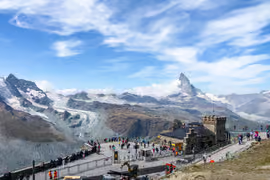
Switzerland is often reduced to images of snow-covered Alps, mountain railways and lakes, but the country is much more varied than that familiar picture. The Best Parks and Tourist Centers in Switzerland include protected mountain landscapes, regional nature parks, historic cities, UNESCO World Heritage sites, vineyards, lakeside destinations and botanical gardens.
This guide looks at Switzerland through the relationship between its landscapes and communities. It covers the Swiss National Park, regional nature parks, major mountain and lake destinations, historic centres, heritage landscapes and gardens. It also explains how geography, seasons, transport and visitor pressure can change the experience from one region to another.
The objective is not to create a checklist of every famous Swiss attraction. Instead, TravelTourCare helps you understand which destinations fit your interests and the time of year you are travelling. Whether your priority is hiking, heritage, gardens, scenic rail travel, lakes, mountains or slower regional exploration, planning around geography usually produces a more rewarding journey.
Switzerland brings Alpine wilderness, lakes, historic cities and living cultural landscapes together across four language regions and remarkably varied terrain.
Quick Answer
For protected nature, consider the Swiss National Park, UNESCO Biosphere Entlebuch, Parc Ela, Diemtigtal Nature Park, Jura Vaudois Nature Park and Val Müstair. For major tourist centres, Zurich, Lucerne, Bern, Interlaken, Zermatt, Geneva and Lugano offer different experiences. For gardens, consider the Botanical Garden of Geneva, Botanical Garden of the University of Bern and the Alpinum Schatzalp.
Quick Facts About Switzerland
| Travel Factor | What To Know |
|---|---|
| Parks of national importance | Switzerland has 20 parks of national importance: one national park, 17 regional nature parks and two nature discovery parks. |
| World Heritage | UNESCO currently lists 13 World Heritage properties in Switzerland. |
| Best-known centres | Zurich, Lucerne, Bern, Geneva, Interlaken, Zermatt and Lugano. |
| Mountain travel | Summer and early autumn are important for many hiking routes, while winter supports snow-based travel in suitable areas. |
| City and heritage travel | Major cities and historic centres can be visited year-round, with seasonal differences affecting outdoor sightseeing. |
| Main interests | Mountains, lakes, hiking, scenic railways, heritage, gardens, food, winter sports and regional culture. |
| Before travelling | Verify mountain conditions, transport, trail status, weather, seasonal restrictions and current travel requirements. |
Why Switzerland Needs Context Before You Go
Switzerland is relatively compact, but altitude changes the travel experience dramatically. A city beside a lake can have mild conditions while a nearby mountain route remains affected by snow, ice or rapidly changing weather. Even within the Alps, valley conditions and high-elevation conditions can be very different.
The country also has four national languages: German, French, Italian and Romansh. This is more than a linguistic fact. It reflects different historical and cultural regions, each with its own architecture, food traditions and landscapes. Travelling from Zurich towards Geneva or Lugano can feel like entering a different cultural environment while remaining within the same country.
Visitor pressure also varies. Famous mountain destinations and scenic viewpoints can become busy during peak periods, while lesser-known regional parks may offer a slower experience. A well-planned trip therefore combines iconic destinations with enough time to understand the surrounding region.
The Core Problem Travellers Face
Switzerland encourages a checklist mentality: Matterhorn, Jungfraujoch, Lucerne, Interlaken and a famous train journey. Those places can be worthwhile, but they do not automatically form a coherent itinerary. A better approach is to decide whether your priority is alpine hiking, lakes, winter landscapes, heritage, gardens, scenic rail travel or regional culture, then choose destinations that support that interest without excessive transfers.
Destination Overview: How Switzerland’s Geography Shapes Travel
Switzerland sits at the meeting point of the Alps, Swiss Plateau and Jura Mountains. Much of the country’s visual identity comes from its mountain landscapes, but valleys, lakes, forests, rivers, vineyards and urban areas create a much more complex geography. The Alps dominate the south and centre, while the Plateau contains many of the country’s largest cities.
The country’s position also creates strong regional contrasts. Western Switzerland has French-speaking cultural influences, Ticino in the south has an Italian-speaking identity, the central and eastern regions are largely German-speaking, and Romansh remains an important part of Graubünden’s cultural landscape. These regional differences make Switzerland particularly suitable for slow travel that allows visitors to compare landscapes and traditions rather than rushing between isolated attractions.
National Parks And Protected Areas
Switzerland’s protected-area system is broader than its single national park. The Swiss Parks Network currently identifies 20 parks of national importance: the Swiss National Park, 17 regional nature parks and two nature discovery parks. These areas protect natural and cultural landscapes while supporting sustainable regional development.
Swiss National Park (Graubünden)
The Swiss National Park in southeastern Switzerland is the country’s only national park and has protected its landscape since 1914. It is known for alpine scenery, forests, meadows, valleys and a strong emphasis on natural processes. Hiking and nature observation are central activities, with numerous designated routes providing different levels of challenge. Summer and early autumn are particularly useful for many hiking experiences, while conditions vary with elevation. It suits travellers who want a more strictly protected mountain environment. Visitors must follow park regulations, remain on permitted routes and understand that conservation takes priority over convenience.
UNESCO Biosphere Entlebuch (Lucerne Region)
UNESCO Biosphere Entlebuch is known for its extensive moorlands, karst landscapes, mountain streams and rural cultural landscape. Unlike a wilderness-only destination, the biosphere illustrates how communities and nature can exist together within a protected regional system. Hiking, landscape observation and local cultural experiences are important ways to explore the area. Warmer months are useful for many outdoor activities, although conditions change throughout the year. It suits travellers interested in sustainability, rural landscapes and nature. Visitors should support local communities while respecting sensitive wetlands, grasslands and other protected habitats.
Parc Ela (Graubünden)
Parc Ela is the largest Swiss park by area and encompasses a broad mountain landscape in Graubünden. Alpine valleys, villages, rivers, mountain pastures and cultural traditions contribute to its identity. Hiking, cycling, regional food and landscape observation can all form part of a visit. Summer and early autumn are particularly useful for many outdoor activities, while winter creates a different mountain experience. It suits travellers who want to explore the Alps beyond the most concentrated resort destinations. Responsible travel means using designated paths, respecting agricultural areas and recognising that the landscape is both protected and actively inhabited.
Diemtigtal Nature Park (Bernese Oberland)
Diemtigtal Nature Park lies in a valley landscape shaped by mountain agriculture, traditional buildings, forests and alpine terrain. It provides a useful alternative to the more famous resort centres of the Bernese Oberland. Hiking, cycling, local culture and seasonal mountain activities are central to the area. Summer is particularly suitable for many walking routes, while winter supports snow-based experiences when conditions allow. It suits travellers looking for a quieter interpretation of the Swiss Alps. Visitors should respect farming operations, keep to appropriate paths and avoid disturbing livestock.
Jura Vaudois Nature Park (Vaud)
Jura Vaudois offers a different landscape from the high Alps. Its wooded Jura ridges, pastures, villages and views towards Lake Geneva provide a more gently undulating environment. Walking, cycling and discovering local traditions are important activities. Spring through autumn can be useful for exploring the landscape, although weather changes with elevation. The park suits travellers who want nature without the physical demands of high alpine terrain. Responsible travel includes respecting pastureland, keeping dogs under control where required and leaving natural areas undisturbed.
Biosfera Val Müstair (Graubünden)
Biosfera Val Müstair is a distinct cultural and natural landscape in southeastern Switzerland, adjacent to the Swiss National Park. Its villages, meadows, mountains and traditional character provide a strong example of a regional destination where conservation and local life are connected. Hiking and cultural exploration work particularly well here, with summer and early autumn offering broad opportunities for outdoor travel. It suits visitors interested in landscapes, traditions and slower rural journeys. Travellers should respect local communities and avoid treating villages and agricultural areas simply as scenic backdrops.
Regional Nature Park Gruyère Pays-d’Enhaut (Vaud, Fribourg and Bern)
This regional park links mountain and pre-Alpine landscapes across several cantons and is closely associated with traditional farming, villages, alpine pastures and regional food culture. It is particularly useful for travellers who want to connect scenery with everyday rural life. Hiking and cycling are important in warmer months, while seasonal food and cultural experiences can extend beyond outdoor activities. It suits travellers who prefer landscapes with a strong human and agricultural presence. Visitors should respect pasture boundaries, farming work and local traditions while exploring.

Tourist Centres And Cultural Attractions
Switzerland’s tourist centres vary considerably. Zurich is a major urban and economic centre, Lucerne combines a historic city with a lake and mountain setting, Bern offers a UNESCO-listed medieval urban landscape, and Geneva has a strong international and lakeside identity. Interlaken and Zermatt are more strongly oriented towards mountain tourism, while Lugano introduces an Italian-speaking cultural landscape.
Zurich (Zurich)
Zurich is Switzerland’s largest city and a major gateway for international travellers. The city combines a historic old town with Lake Zurich, the Limmat River, museums, galleries, contemporary districts and extensive public green spaces. It suits travellers who want an urban introduction to Switzerland before moving into the mountains or countryside. Spring and autumn can be comfortable for walking, while winter gives the city a different atmosphere. Zurich works particularly well as a starting point because transport connections make it practical to combine with other regions. Travellers should not overlook its neighbourhoods and cultural institutions in favour of using the city only as an airport gateway.
Lucerne (Central Switzerland)
Lucerne is one of Switzerland’s strongest combinations of historic urban scenery and lake-and-mountain landscapes. Its old town, covered bridges, Lake Lucerne and nearby mountains create a compact destination with several different travel experiences. It suits first-time visitors who want classic Swiss scenery without immediately committing to a remote mountain itinerary. Spring through autumn provides strong conditions for combining city walks with outdoor excursions, while winter creates a different lakeside and mountain atmosphere. Because Lucerne is highly popular, early planning and realistic expectations around busy periods can improve the experience.
Bern (Bern)
Bern is Switzerland’s federal city and its Old City is a UNESCO World Heritage property. The historic centre developed on a hill surrounded by the Aare River and retains a distinctive medieval street structure, arcades and fountains. It suits travellers interested in architecture, history and urban walking rather than mountain activities alone. The compact historic core makes it particularly accessible for a slower cultural day. Visitors should give attention to the city’s relationship with the river and surrounding landscape rather than limiting the visit to individual monuments.
Interlaken (Bernese Oberland)
Interlaken sits between Lake Thun and Lake Brienz and is one of Switzerland’s best-known bases for exploring the Bernese Oberland. Its importance comes less from a single historic monument and more from its position between lakes, valleys and mountain destinations. It suits travellers interested in outdoor activities, scenic transport and excursions into the surrounding Alps. Summer and early autumn are particularly useful for hiking, while winter shifts the focus towards snow and mountain activities. The town can become busy, so travellers seeking a quieter experience may benefit from exploring nearby communities instead of concentrating solely on the central tourist area.
Zermatt (Valais)
Zermatt is closely associated with the Matterhorn and is one of Switzerland’s most recognisable mountain destinations. The surrounding landscape offers hiking, mountain viewpoints and winter sports, with different routes and activities depending on the season and elevation. Summer is important for hiking, while winter supports snow-based travel. Zermatt suits travellers whose main interest is iconic Alpine scenery and mountain experiences. The destination’s popularity means that visitors should plan carefully and avoid assuming that every route or mountain excursion operates under identical conditions throughout the year.
Geneva (Geneva)
Geneva sits at the western end of Lake Geneva and provides a distinctly international urban experience within Switzerland. The city combines the lake, historic centre, museums, parks and international institutions. It is particularly useful for travellers interested in diplomacy, culture, architecture and lakeside urban life. Spring and summer are attractive for combining city exploration with the lakefront, while autumn can offer a calmer rhythm. Geneva suits visitors who want a city experience rather than an Alpine resort. Its location also makes it a useful base for exploring the western part of the country.
Lugano (Ticino)
Lugano provides a clear change in atmosphere through its Italian-speaking culture, Mediterranean-influenced architecture, lake landscape and surrounding mountains. Lake Lugano and nearby viewpoints create opportunities for scenic walks, while the city itself provides cafés, cultural attractions and public spaces. Spring and autumn can be particularly pleasant for outdoor exploration, while summer can be warmer and busier. Lugano suits travellers who want to experience Switzerland’s regional diversity and combine lake scenery with a different cultural identity.
Botanical Gardens And Eco Parks
Switzerland’s gardens provide another way to understand its environmental diversity. Botanical collections can move from Alpine plants to Mediterranean species and tropical environments, while urban gardens create green spaces within major cities.
Botanical Garden Geneva (Geneva)
The Botanical Garden of Geneva contains more than 16,000 plant species and combines botanical collections with landscaped spaces and other visitor facilities. Its collections make it useful for travellers interested in plant diversity rather than mountain scenery alone. Spring and summer can be especially rewarding for garden-focused visits, although collections change throughout the year. It suits families, plant enthusiasts and visitors looking for a quieter urban experience near Lake Geneva.
Botanical Garden of the University of Bern (Bern)
The Botanical Garden of the University of Bern contains around 5,500 plant species and presents plant environments ranging from tropical regions and Central Asian landscapes to Mediterranean areas, East Asian forests and Alpine environments. Its compact urban setting makes it a practical cultural and educational stop. It suits travellers interested in botany, science and urban green spaces, particularly when combined with Bern’s historic centre.
Alpinum Schatzalp – Botanical Garden (Davos)
Alpinum Schatzalp is a botanical garden in the Davos area that focuses on Alpine and mountain plants. Its elevated setting makes it particularly useful for understanding vegetation adapted to mountain environments. It suits travellers already exploring the Graubünden region who want a more specialised nature experience. Seasonal conditions strongly influence the garden, so travellers should verify current access and flowering conditions before planning specifically around it.
Best Time To Visit Switzerland
Spring: Spring brings changing conditions from valley to mountain. Lower elevations become suitable for gardens, cities and walking earlier, while higher routes can remain affected by snow.
Summer: Summer is a major season for hiking, mountain excursions, lakes and outdoor travel. Higher-elevation weather can still change quickly, so route-specific conditions matter.
Autumn: Autumn can be excellent for forests, vineyards, cities and mountain scenery. As temperatures fall, higher trails can become more difficult or seasonally restricted.
Winter: Winter is important for snow sports and mountain landscapes, while cities remain accessible for cultural travel. Conditions vary significantly between valleys and high elevations.
Shoulder periods: Spring and autumn can provide a useful balance for travellers who want fewer peak-season pressures, but some mountain transport and trails may operate differently between seasons. Always verify conditions for the exact destination.
Real-World Travel: How These Places Actually Work
Transport And Getting Around
Switzerland’s rail and public transport network makes it possible to connect major cities, lakeside towns and many mountain destinations without relying entirely on a car. Scenic railway routes can themselves become part of the travel experience. However, a transport connection to a mountain town does not guarantee that every hiking route or high-altitude excursion will be accessible. Plan each journey in stages and check the current operating status of the specific service you need.
Parks And Trails
Protected landscapes vary considerably in their rules. The Swiss National Park has a strict conservation approach, while regional nature parks combine protected landscapes with agriculture, villages and local economies. A trail that appears easy on a map may involve elevation gain, exposed terrain or changing weather. Check the route’s current conditions, choose footwear appropriate to the terrain and follow local signs.
Heritage Sites And Cities
Swiss heritage destinations are often living places rather than isolated monuments. Bern’s Old City, the vineyards of Lavaux and historic towns are part of functioning communities. Visitors should respect residential areas, religious buildings and local routines. Walking slowly, using public transport where practical and spending time in smaller regional destinations can make the journey more connected to the country rather than simply to its most photographed viewpoints.
Regional Systems: How Switzerland Divides For Travellers
German-Speaking Central And Eastern Switzerland
Zurich, Lucerne, Bern and much of central and eastern Switzerland provide strong combinations of cities, lakes, mountain excursions and German-speaking cultural traditions. This is a practical area for first-time visitors who want variety without crossing the entire country.
Bernese Oberland And Valais
The Bernese Oberland and Valais are particularly strong for dramatic mountain landscapes. Interlaken, Grindelwald, Lauterbrunnen and Zermatt can anchor alpine itineraries, although travel should be planned around elevation and seasonal conditions.
Western Switzerland
The French-speaking region around Geneva, Lausanne and Lake Geneva offers urban culture, vineyards, lake landscapes and access to the Jura and Alpine environments. Lavaux provides a particularly strong example of how agriculture and landscape can form a cultural heritage destination.
Ticino And Graubünden
Ticino introduces Italian-speaking Swiss culture and lake landscapes, while Graubünden provides a particularly strong concentration of mountains, valleys, regional parks and Romansh cultural heritage. These regions are ideal for travellers who want Switzerland beyond its most familiar central routes.
Travel Safety, Culture And Wellness
Mountain safety should be taken seriously. Weather can change rapidly, snow can remain at elevation after valley temperatures rise, and trails can include steep or exposed sections. Hiking ability should be matched to the actual route rather than to a destination’s general reputation. Check local conditions and official warnings before heading into the mountains.
Switzerland’s four national languages are part of its cultural identity. Language, food traditions, architecture and local customs can change between regions. Visitors should not assume that every part of the country operates culturally in the same way. Basic courtesy, quiet behaviour in residential areas and respect for local customs are useful everywhere.
Wellness planning matters because Swiss itineraries can involve significant walking and altitude changes. A morning in a city followed by a high mountain excursion can be physically demanding. Allow enough time to adjust to elevation, stay hydrated and avoid scheduling too many strenuous activities consecutively.
Decision Framework: Plan Your Switzerland Route
- Identify your travel style: Decide whether you prioritise mountains, lakes, heritage, gardens, winter sports, rail journeys or regional culture.
- Choose a region: Build around central Switzerland, the Bernese Oberland, western Switzerland, Ticino or Graubünden rather than trying to cover everything.
- Match the season: Check snow, trail conditions, weather and seasonal mountain access.
- Verify transport: Confirm current rail, cable-car, ferry and local transport conditions for each excursion.
- Travel responsibly: Respect protected landscapes, residents, farming areas and cultural heritage.
Action Checklist
Before You Go
- Check current entry and travel requirements.
- Research the elevation and weather of mountain destinations.
- Verify current trail and transport conditions.
- Choose accommodation and routes that minimise unnecessary transfers.
During Your Visit
- Carry appropriate clothing for changing conditions.
- Stay on marked hiking routes.
- Respect public transport etiquette and local communities.
- Allow realistic time for mountain and rail connections.
At Sensitive Sites
- Do not enter restricted conservation areas.
- Keep away from unstable terrain and glacier hazards.
- Respect wildlife and agricultural areas.
- Follow rules at heritage sites, gardens and religious buildings.
Common Mistakes And How To Fix Them
- Mistake: Assuming Switzerland is one climate zone. Correction: Check conditions by elevation and region because valley and mountain weather can be very different.
- Mistake: Planning only around famous mountain names. Correction: Choose a regional base and explore the surrounding landscape instead of treating each mountain as an isolated attraction.
- Mistake: Ignoring altitude. Correction: Consider elevation when planning hikes and allow your body time to adapt to strenuous mountain activities.
- Mistake: Treating scenic trains as ordinary transport. Correction: Research the route itself because railway journeys can form an important part of the experience.
- Mistake: Visiting only the major tourist centres. Correction: Add a regional nature park or smaller community to experience Switzerland’s relationship between nature, agriculture and local culture.
Common Misconceptions About Switzerland
- Switzerland is only about the Alps: Lakes, vineyards, forests, cities, Jura landscapes and cultural heritage are equally important.
- Every mountain destination is accessible year-round: Snow, weather and seasonal operations can change access.
- The Swiss National Park represents every Swiss park: Regional nature parks have different purposes and include inhabited cultural landscapes.
- Switzerland has one uniform culture: Four national languages and distinct regional histories create significant cultural variation.
FAQs
What are the best national parks in Switzerland?
Switzerland has one national park, the Swiss National Park in Graubünden. For a broader nature experience, travellers can also explore regional parks such as Parc Ela, Diemtigtal, Jura Vaudois and UNESCO Biosphere Entlebuch.
How many parks of national importance does Switzerland have?
Switzerland currently has 20 parks of national importance: one national park, 17 regional nature parks and two nature discovery parks.
What is the best time to visit Switzerland?
Summer is particularly useful for hiking and mountain travel, while winter is important for snow activities. Spring and autumn can suit cities, gardens and lower-elevation landscapes. Conditions vary considerably with altitude.
What are the best tourist centres in Switzerland?
Zurich, Lucerne, Bern, Interlaken, Zermatt, Geneva and Lugano provide different combinations of urban culture, heritage, lakes and mountain scenery.
Is Switzerland suitable for first-time travellers?
Yes. The country’s strong public transport system and compact geography make regional travel practical. The main challenge is planning around altitude, seasonal conditions and the time required for mountain excursions.
Which Swiss destination is best for mountains?
There is no single answer. Zermatt is strongly associated with the Matterhorn, the Bernese Oberland provides extensive mountain scenery, and Graubünden offers broad protected landscapes and regional parks.
Are Swiss parks worth visiting?
Yes. The park network shows that Swiss nature is not limited to high Alpine scenery. Regional parks also connect forests, wetlands, farmland, villages, mountains and local traditions.
How should I plan a Switzerland nature trip?
Choose one or two regions, match them to the season, research the exact trails you want to use, verify transport and weather conditions, and leave enough time for the landscape rather than rushing between viewpoints.
Conclusion
Switzerland is more than a collection of famous Alpine viewpoints. Its one national park sits within a wider network of 20 parks of national importance, while UNESCO heritage sites, historic cities, lakes, vineyards and gardens reveal the cultural side of the landscape. Zurich, Lucerne, Bern, Geneva and Lugano provide different urban experiences, while Graubünden, the Bernese Oberland and Valais offer distinct mountain environments.
The strongest Swiss itinerary is built around geography rather than a long attraction checklist. Choose a manageable region, understand altitude and seasonal conditions, use public transport intelligently and give protected landscapes and local communities the same attention as famous landmarks. That approach makes Switzerland easier to experience at a human pace.
Verify Before You Go
Important: Travel conditions, entry requirements, regulations, health guidance and official notices can change. Use TravelTourCare for research and context, then confirm current requirements with the relevant official authority before making formal travel decisions.
Sources And References
- Swiss Parks Network — Swiss parks and protected regional landscapes
- Switzerland Tourism — Official national tourism information
- UNESCO World Heritage Centre — Switzerland country page
I appreciated how patient they were with my questions. Being a first time buyer I had a lot of them. Everything went how they described and the flower was fresh.
Not bad at all. The pre-rolls burned clean and the price was right. I'll probably grab a bigger order next time.
my guy came thru with the gas no cap. shipping was faster than i expected. good looks
Pricing was fair, buds were fresh, and delivery didn't take forever. Not much else to say. I'll be ordering again soon.
Ain't gonna hype it up too much but the gas was legit. Delivery took like a day and a half. Fair prices.
Was passing through for a conference and didn't know anybody in the city. Found the site, took a chance, and honestly the whole thing felt way less sketchy than I expected. Buds were fresh, dude who dropped it off was polite, and the price wasn't tourist tax either. Appreciate y'all.
Not bad at all. The pre-rolls burn a little uneven but the flower inside is quality so I can't complain too much.
Really appreciated feeling like an actual customer instead of just a number. They followed up after delivery too. Product was fresh and hit as expected.
bro whoever picking these strains got taste fr. the purple punch had me sleep by 10pm lmao
Flew in for a conference and needed something to unwind after long days of meetings. Found them through a friend of a friend and figured I'd try. The disposable I picked up was smooth, hit clean, no headaches the next morning. Prices were a little higher than what I'm used to back home but the quality made sense of it.
Fast, easy, done. Prices reasonable and the stash was fresh.
Was staying with my cousin in Miami and he put me on. Glad he did cause the flower was fresh and the whole process was smooth. Might order again before I fly out.
Traveling through Houston for a few days and needed something reliable. These guys handled it with no stress. Appreciated the professionalism honestly.